
New Hampshire Plug-In Solar Laws
 By Daniel Okafor · Last reviewed
 In short: New Hampshire enacted SB 540 as Chapter 262, but its main plug-in solar route does not take effect until January 1, 2027. The future law permits one qualifying system per metered customer with no more than 1,200 W AC inverter output. Until then, verify the current utility, electrical, permit and property route before connecting a grid-parallel system.

Current status
Signed—not effective
The law has been enacted but its new route is not available yet. Prepare now, then re-check the final implementation on the effective date.
Key facts
- Status: signed July 2, 2026, but the main route begins January 1, 2027
- Future limit: one system per metered customer, up to 1,200 W AC inverter output
- Certification: the complete system must be certified by a nationally recognized testing laboratory
- SB 540 does not name UL 3700 or make an inverter listing equal to a system listing
- Building-code section: separate contingent effective date tied to a commissioner certification
- Export: no export-credit right is created by Chapter 262
Check your location
Framework status and exact product eligibility are separate checks.
What this means today
Chapter 262 is enacted, but signing and effectiveness are different events. The chaptered final version sets January 1, 2027 for the definition, certification rule and utility exemptions. Before that date, those provisions do not authorize a connection. Anyone planning an earlier connection must ask the serving utility and local authority how existing interconnection, electrical and permit rules apply to the exact configuration.
The exemption has a narrow scope. It applies to a movable photovoltaic system intended to offset onsite consumption, connected through a receptacle or other non-permanent wiring connection and compliant with national interconnection and interoperability standards. The law does not grant permission to use a rented balcony, common area or unsuitable railing. It also does not promise export compensation.
What applies now versus January 1, 2027
| Question | Before January 1, 2027 | Chapter 262 route from January 1, 2027 |
|---|---|---|
| Legal status | The future plug-in-specific exemptions are not in force. | The enacted route becomes available to a system that satisfies every statutory condition. |
| Utility approval | Ask the serving utility how its current process classifies the exact grid-parallel system. | A utility cannot require prior approval from a customer using a compliant qualifying system. |
| Interconnection agreement | Do not assume an exemption; verify the current utility and Puc 900 route. | A utility cannot require interconnection review or an executed interconnection agreement for a compliant system. |
| System size | The future 1,200 W ceiling is not present permission. | One system per metered customer, with maximum inverter output of 1,200 W AC. |
| Safety evidence | Use current electrical rules and verify the complete configuration. | The plug-in solar generation system must be certified by an NRTL to applicable national safety standards. |
| Utility notice | Follow the current process supplied for the site. | A utility may create post-installation wattage notification, but the statute limits it to notification. |
| Export credit | Only a documented tariff or utility arrangement establishes value. | The law creates no export-credit right; size savings around onsite use unless billing treatment is documented. |
What SB 540 / Chapter 262 says
SB 540 became Chapter 262 when Governor Kelly Ayotte signed it on July 2, 2026. The final act defines a plug-in solar generation system, sets a one-system and 1,200 W AC inverter-output ceiling, requires complete-system NRTL certification and limits what a utility may demand from a compliant customer. Section 262:7 places the main route on January 1, 2027. It gives the building-code section a separate contingent start tied to a certification by the Department of Energy commissioner.
Read the official bill record ↗
SB 540 timeline and commencement
| Date | Official event | What it means |
|---|---|---|
| January 7, 2026 | Introduced in the Senate | The proposal entered the Energy and Natural Resources Committee. |
| April 23, 2026 | House passed amended bill 293-43 | The House added the version that contains the final route's core structure. |
| May 7, 2026 | Senate concurred | Both chambers agreed to the House amendment. |
| July 2, 2026 | Governor signed Chapter 262 | The bill became enacted law, but most provisions retained a future effective date. |
| January 1, 2027 | Main route takes effect | The definition, NRTL rule and utility exemptions begin under the final effective-date clause. |
| Contingent | Building-code section | RSA 155-A:16 starts only on the commissioner certification described in section 262:6. |
The 1,200 W limit is inverter AC output
Chapter 262 measures maximum inverter output, not the sum of panel nameplate watts. A kit may advertise a larger DC panel figure while limiting AC output through its inverter. Compare the exact continuous AC specification with the statutory 1,200 W ceiling and do not use a seller's product-family headline as the measurement.
One plug-in solar generation system is allowed per metered customer. Splitting several kits across outlets does not convert them into one compliant system. The complete arrangement, including panels, inverter, cable, plug, controls and instructions, must match the certified configuration.
NRTL certification is a complete-system gate
The final text requires the plug-in solar generation system to be certified by a nationally recognized testing laboratory to applicable national safety standards. OSHA recognizes laboratories for defined product standards and scopes. An NRTL mark on one inverter therefore does not establish that the assembled panel, inverter, cable, plug and control package has the complete-system certification required by the future New Hampshire definition.
SB 540 does not name UL 3700, UL 1741 or another standard number. Ask the seller for the exact model and configuration in the certifier's public directory, the standard used, and every installation condition attached to the listing. Describe missing system evidence as not verified. Do not turn a component badge or a claim of design intent into system certification.
The building-code date has a separate trigger
Most of Chapter 262 starts January 1, 2027. Section 262:3 is different. It adds RSA 155-A:16 and takes effect only when the Department of Energy commissioner certifies that a nationally recognized standard exists authorizing plug-in solar systems to connect safely to a building's electrical system. Check the official implementation record rather than assuming this contingency follows the main date automatically.
The enacted text says each system must be installed and operated according to the state building code and manufacturer instructions. New Hampshire's current statutory code definition includes the 2023 National Electrical Code. Local enforcement, permits, outlet condition, branch-circuit protection and mounting can still matter even when the utility exemptions begin.
Meter, billing and insurance still need answers
The Department of Energy must maintain consumer information about meter compatibility across distribution utilities, potential billing effects, safety considerations and other relevant details. A utility exemption does not determine how every installed meter records reverse flow or what a bill credits. Chapter 262 does not create a right to export compensation.
The future consumer guidance must also warn that unlisted systems, or systems connected contrary to code or manufacturer instructions, may affect homeowners or renters insurance coverage. This is not a prediction that a claim will be denied. It is a reason to give the insurer the exact listed configuration, mounting plan and installation method before purchase and keep the response in writing.
Property and mounting gates remain separate
Chapter 262 changes specified utility requirements for compliant systems. It does not grant a tenant the right to attach panels to a balcony, facade or common area, and it does not certify a railing or freestanding mount for snow, ice and wind. Obtain the property decision for the exact panel position, bracket, support, cable route and removal plan.
Use manufacturer-approved hardware and preserve exits, drainage and safe access. A no-drill clamp can still load a railing or create a falling-object risk. Recheck the mount after severe weather and stop using the system if the support, cable, plug or outlet shows damage, movement, heat or moisture ingress.
Your serving utility still matters
Chapter 262's main plug-in solar route takes effect January 1, 2027. Until then, ask the serving utility and local authority how current interconnection, electrical and permit rules classify the exact grid-parallel system.
Pre-purchase checklist
- 1Wait for January 1, 2027 before relying on Chapter 262's main exemptions; for an earlier plan, obtain the current route from the serving utility and local authority.
- 2Confirm the exact configuration is one system and its maximum inverter output is no more than 1,200 W AC; keep panel DC watts separate.
- 3Find the complete system, exact model and applicable standard in an OSHA-recognized NRTL's public certification directory.
- 4Confirm the certification covers the supplied panels, inverter, cable, plug, controls and installation conditions rather than one component alone.
- 5Check whether the section 262:6 building-code contingency has an official commissioner certification and follow the code in force.
- 6Ask the utility how to give any post-installation wattage notice and how the site's meter records surplus flow.
- 7Model savings from onsite use unless a current tariff or written utility response documents export credit.
- 8Obtain landlord, condominium or HOA permission for the exact mount, exterior location and cable route.
- 9Check structural capacity, wind, snow, ice, drainage, fire access, outlet condition and manufacturer instructions.
- 10Give the insurer the exact listed system and installation plan; retain the written response and commissioning record.
Next steps
Products within the tracked limit
These products are marked as US-available, in stock and at or below the tracked AC watt cap. A dataset match is not a finding of legal compliance or verified system-level certification.
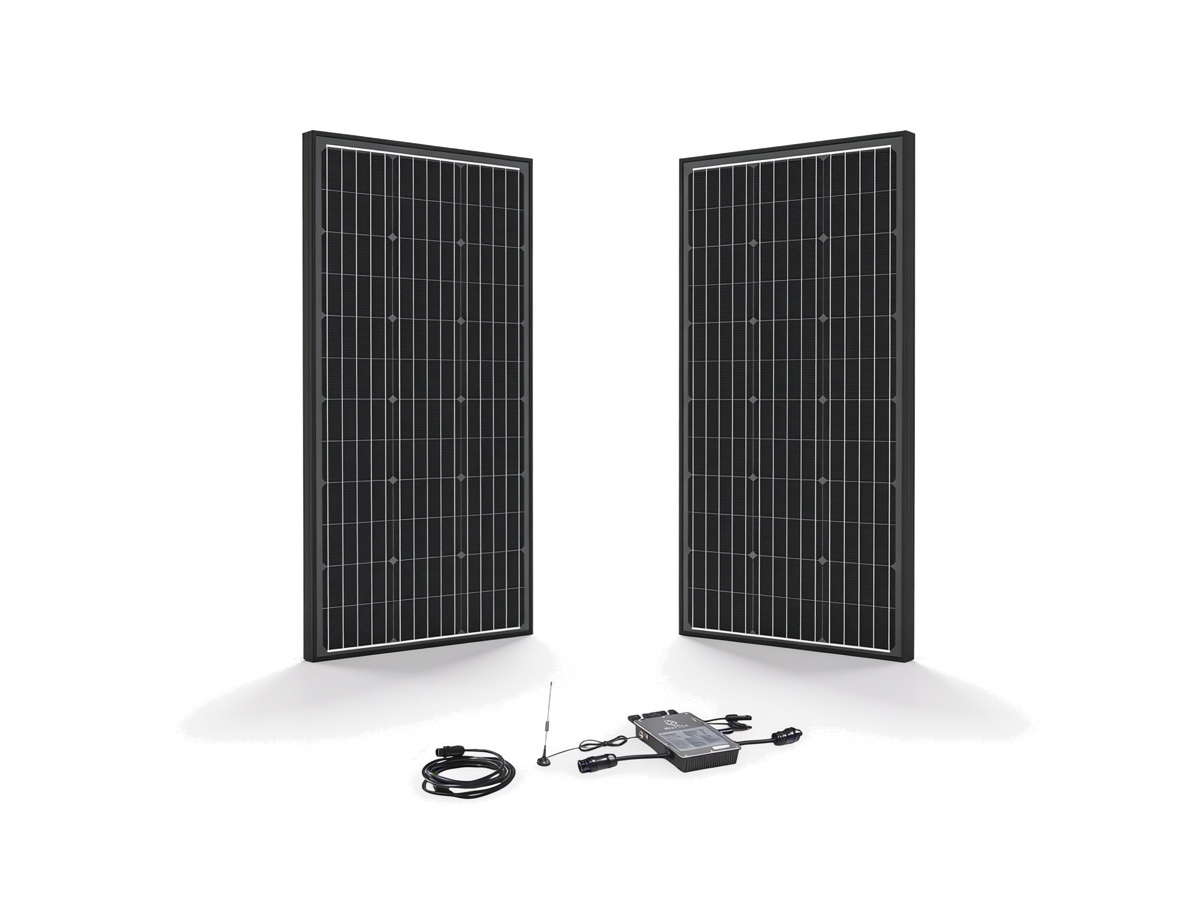
CraftStrom 400 Watt Plug&Play Solar — Two panels, one smart inverter, AC cable and mounting hardware; the PowerMeter is not included in this configuration.
- 350 W grid-tie output
- 400 W hardware output
- 2 panels included
- No battery option listed
- Mounting included
- 10-year warranty
- Listings: US
- UL 3700 system evidence not verified
CraftStrom 400 Watt Plug&Play Solar — Two panels, one smart inverter, AC cable and mounting hardware; the PowerMeter is not included in this configuration.
- 350 W grid-tie output
- 400 W hardware output
- 2 panels included
- No battery option listed
- Mounting included
- 10-year warranty
- Listings: US
- UL 3700 system evidence not verified
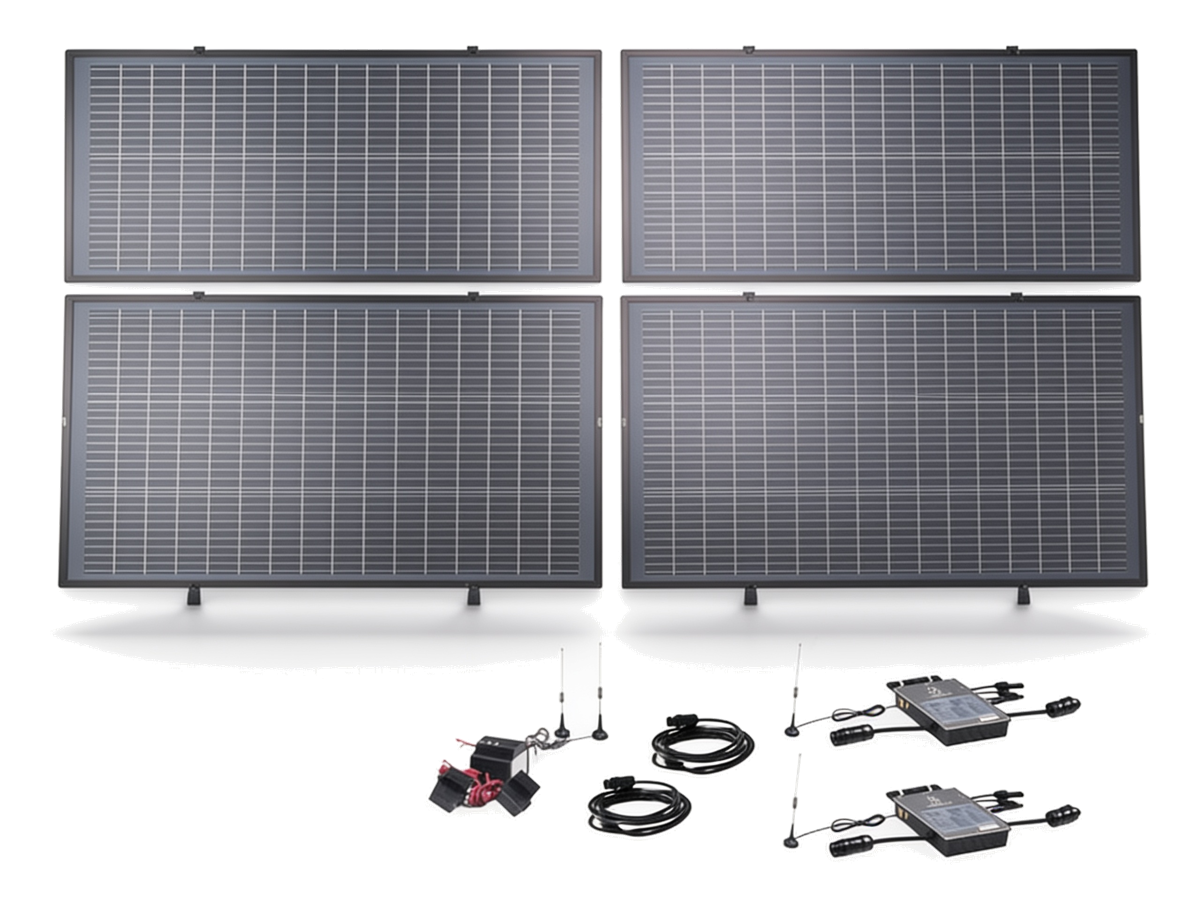
CraftStrom 800 Watt Plug&Play Solar — Four panels, two smart inverters, PowerMeter, mounting hardware and connection cables.
- 700 W grid-tie output
- 800 W hardware output
- 4 panels included
- No battery option listed
- Mounting included
- 10-year warranty
- Listings: US
- UL 3700 system evidence not verified
CraftStrom 800 Watt Plug&Play Solar — Four panels, two smart inverters, PowerMeter, mounting hardware and connection cables.
- 700 W grid-tie output
- 800 W hardware output
- 4 panels included
- No battery option listed
- Mounting included
- 10-year warranty
- Listings: US
- UL 3700 system evidence not verified
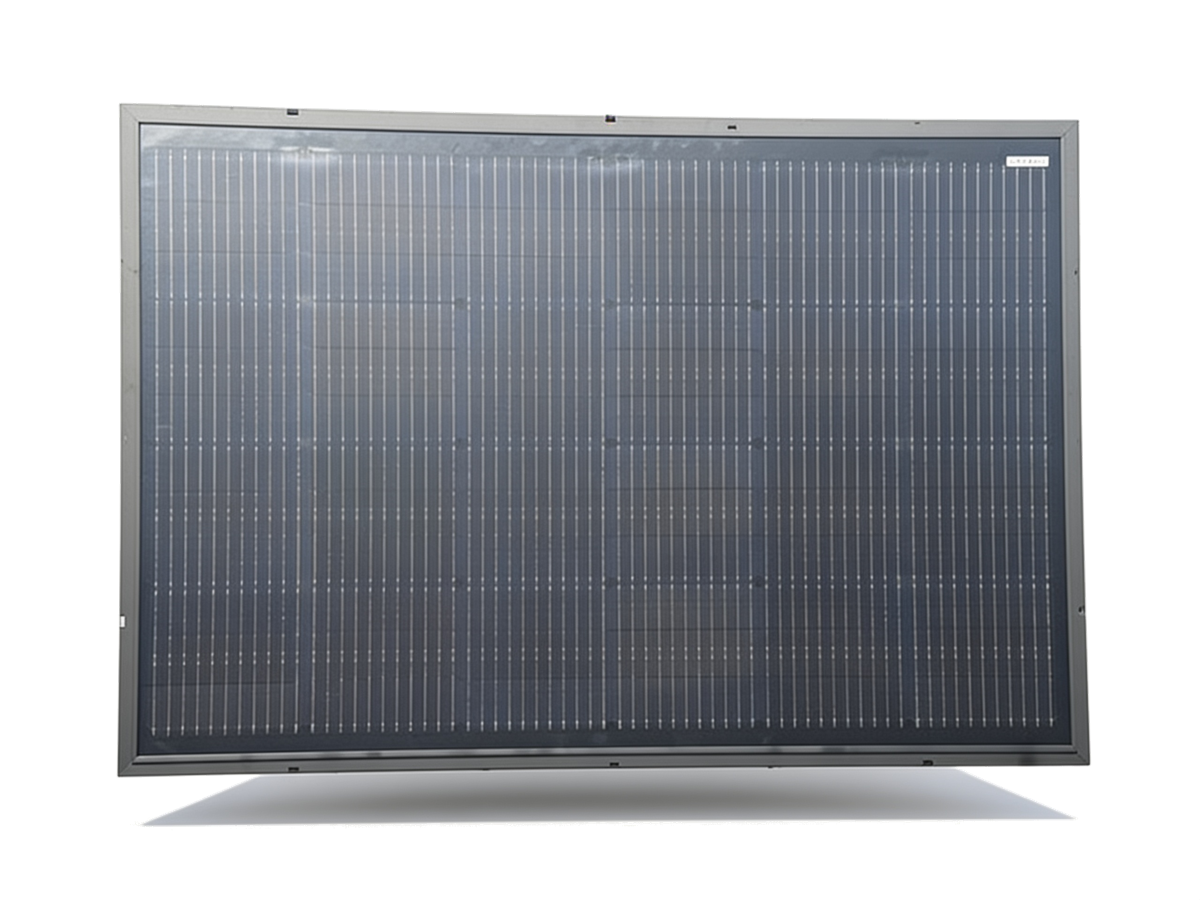
Bright Saver Flex180 single-panel kit — One 180 W flexible panel, one 120 V inverter, AC cable and self-install instructions; mounting hardware is not listed as included.
- 180 W grid-tie output
- 1 panels included
- No battery option listed
- Mounting excluded
- Warranty term not verified
- Listings: US
- UL 3700 system evidence not verified
Bright Saver Flex180 single-panel kit — One 180 W flexible panel, one 120 V inverter, AC cable and self-install instructions; mounting hardware is not listed as included.
- 180 W grid-tie output
- 1 panels included
- No battery option listed
- Mounting excluded
- Warranty term not verified
- Listings: US
- UL 3700 system evidence not verified
Model value with the savings calculator and review the safety guide.
Primary sources
Frequently asked questions
Is plug-in solar legal in New Hampshire right now?
SB 540 is signed, but Chapter 262's main plug-in-specific route begins January 1, 2027. Before then, the future exemptions are not present permission. Ask the serving utility and local authority how current interconnection, electrical and permit rules classify the exact system. The absence of the future route does not by itself prove every configuration prohibited.
When does New Hampshire SB 540 take effect?
Most of Chapter 262 takes effect January 1, 2027. Section 262:3, which adds the building-code provision in RSA 155-A:16, has a separate contingent date. It starts when the Department of Energy commissioner makes the certification described in section 262:6. Do not replace either rule with the July 2, 2026 signature date.
What is the New Hampshire plug-in solar watt limit?
The future route allows one plug-in solar generation system per metered customer with maximum inverter output of 1,200 W AC. The statute does not use combined panel DC nameplate watts for this ceiling. Check the inverter's exact continuous AC output and the certified complete configuration rather than a seller's headline panel wattage.
Does SB 540 require UL 3700 certification?
SB 540 does not name UL 3700 or another standard number. It requires the complete plug-in solar generation system to be certified by a nationally recognized testing laboratory to applicable national safety standards. Verify the exact system and standard in the certifier's directory. A UL 1741 inverter listing alone does not establish complete-system certification.
Will I need utility approval after January 1, 2027?
For a system that satisfies every statutory condition, Chapter 262 says the utility cannot require prior approval, interconnection review, an executed interconnection agreement, related fees or extra utility-specified controls beyond the system. The utility may create a post-installation wattage notification method. Non-qualifying configurations remain outside that narrow exemption.
Will New Hampshire pay for exported plug-in solar power?
Chapter 262 creates no right to export compensation. It defines the system around offsetting onsite consumption and directs the Department of Energy to explain meter compatibility and billing effects. Base savings on electricity used in the home while the system produces unless the serving utility documents how the meter and tariff value surplus flow.
Does SB 540 give renters or HOA residents permission?
No. The act addresses specified utility and safety conditions. It does not grant permission to use a rented balcony, common area, facade or railing. Obtain written approval for the exact equipment, mount and cable route, then check structural, local, insurance and manufacturer requirements separately. A utility exemption is not property consent.