
US Plug-In Solar Laws by State
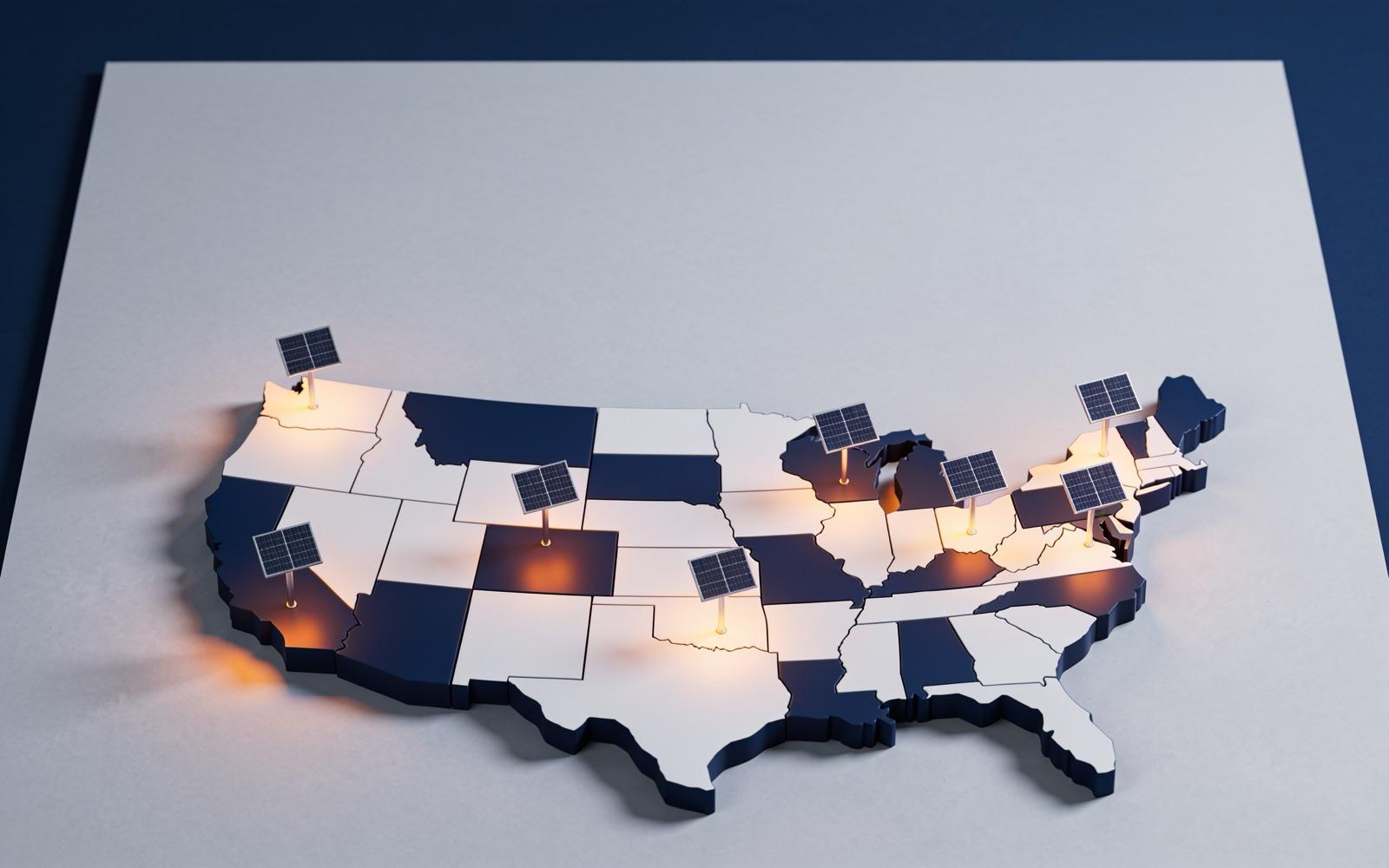
The July 2026 national tracker reported eight signed plug-in solar laws and 18 pending bills. State records can move or close after a tracker snapshot, so each WattRank state page distinguishes effective laws, future laws, active proposals, ended proposals and research-required routes.
Evidence snapshot
A fast-moving US legislative wave
The July 2026 national tracker counted eight signed state laws and 18 pending bills, while six states were considering action and 19 had no known activity. WattRank uses that tracker for discovery and cross-checking, then links state legislature records wherever a bill exists.
The laws are not interchangeable. Effective dates and watt limits differ, and the final act’s definition must be matched to continuous inverter AC output, circuit conditions, anti-islanding and other safety requirements.
Alaska record
HB 257 ended without passage
The bill remained in House Energy when the second regular session ended on May 20, 2026. The special-session carry-over resolution named HB 381 and SB 280, not HB 257, so the former 1,200 W maximum-power-output proposal created no exemption.
Read the ended proposal and Alaska's current utility routeIowa record
HF 2046 ended when the session adjourned
The official history lists introduction and referral to House Commerce on January 14, 2026 as the only action. The 91st General Assembly adjourned sine die on May 3, so the former 1,200 W maximum-power-output proposal created no exemption.
Compare Iowa's ended proposal with the current utility routeOklahoma record
HB 4060 ended in the Senate Energy Committee
The House passed HB 4060 by 88-4, but the official record shows no Senate passage before the Legislature adjourned sine die on May 15. Its proposed 1,200 W aggregate AC route and November 1 date never took effect.
Compare Oklahoma's ended proposal with the current provider routeHawaii record
Four 2026 portable-solar proposals ended
SB 2902, HB 2609, HB 2486 and HB 2435 proposed different 1.2 kW or 1,200 W pathways. None became law before the regular session adjourned sine die on May 8, so Hawaiian Electric and KIUC procedures still control grid-parallel interconnection.
Compare Hawaii's ended bills with the two current utility routesMichigan watch
HB 5764 remains in House Energy
The introduced bill proposes a 1,200 W maximum-power-output route with notice within 30 days, but the official record shows no committee report or vote. MPSC-approved utility interconnection procedures still apply before parallel operation.
Compare Michigan's pending proposal with the current MIXDG routeSouth Carolina watch
H 4579 addresses property bans, not grid approval
H 4579 remains in House Labor, Commerce and Industry. It would limit balcony-solar bans in leases, covenants, HOA documents and by government bodies, but it sets no watt limit, product standard or interconnection exemption.
Read the pending property bill and current utility routeVirginia prepare
HB 395 and SB 250 start January 1, 2027
Virginia's signed route combines an unclassified 1,200 W maximum-power limit, a separate 391 W receptacle-output clause, pre-installation SCC notice, NRTL evidence, zero export and tenant conditions. None of those future exemptions applies before commencement.
Read the future route, notice process and renter gatesMassachusetts watch
H.5175 and S.3166 are unresolved in conference
The House passed a 1,200 W portable-device route, while the Senate passed different 391 W, notice and tenant provisions. The House non-concurred on July 16, 2026, and the official record shows a conference committee, not an enacted exemption.
Compare both bills with the current Massachusetts routeCalifornia watch
SB 868 is on the governor's desk
The Assembly passed the final bill 73-0, the Senate concurred 36-4, and the Legislature presented it to the governor on August 31. The enrolled 1,200 W aggregated AC route is not current permission unless the bill is enacted and in force.
New York watch
The SUNNY Act passed both chambers but is not signed
S8512C/A9111C passed the Assembly and Senate on May 28, 2026. The official record does not show delivery to the governor or signature, so the proposed 1,200 W AC exemption and 90-day effective-date clock are not active.
Read the final proposal, current route and evidence checksIllinois watch
SB 3104 is back in Assignments, not enacted
The adopted committee text combines a 1,200 W outlet-export definition with a 391 W installation threshold. A later amendment would explicitly name UL 3700, but the official action history does not show that amendment adopted.
Compare the current route, adopted text and pending amendmentPennsylvania watch
HB 1971 remains in House Energy
The official record still lists October 28, 2025 referral to House Energy as the last action. Its proposed 1,200 W grid-output route, utility exemptions and uncompensated-export rules are not current law.
Read the pending bill, current route and evidence checksMinnesota watch
HF 3555 and SF 3873 remain in committee
The companion bills would create a 1,200 W maximum-power-output exemption, but neither official record shows committee passage. Minnesota PUC guidance still directs customers to obtain local utility approval before installing grid-parallel solar.
Compare the current Minnesota route with both pending billsDelaware study
SB 270 is pending while the SR 21 study moves forward
SB 270 remains in Senate Environment, Energy & Transportation and its proposed 800 W route is not law. The separate SR 21 passed on June 24 and requests research on export, safety, meter configurations and customer bills by January 26, 2027.
Separate Delaware's pending bill from the study that passedNew Hampshire prepare
Chapter 262 starts January 1, 2027
SB 540 was signed on July 2, 2026, but the chaptered final version puts the main 1,200 W AC route, NRTL system rule and utility exemptions on January 1, 2027. The building-code section has a separate contingent start.
Read the signed law, two effective-date rules and preparation checklistConnecticut prepare
Public Act 26-127 starts October 1, 2026
Section 9 creates a route for one qualifying device per meter with no more than 1,200 W maximum power output. It names a standard 120 V outlet, NFPA 70, IEEE 1547, NRTL certification with UL 1741, outage isolation and a meter warning.
Read the Connecticut effective-date, device and meter gatesStatus legend
How to read each status
Effective
A specific statewide framework is in force.
Next: Verify device and utility conditions.
Signed—not effective
An enacted law has a future date.
Next: Prepare; do not rely on the future route yet.
Passed—not signed
Both chambers passed the bill, but it has not become law.
Next: Track delivery and governor action.
In conference
Both chambers passed different texts and have not agreed on a final bill.
Next: Track the conference report and final votes.
Bill introduced
A proposal is pending and may change or fail.
Next: Track the official legislature record.
Session ended
The tracked proposal did not pass and is no longer active.
Next: Use current rules and watch for a new bill.
No specific framework
No statewide plug-in-specific route was verified.
Next: Research existing utility and local rules.
A state law is only one layer. Utility implementation, the National Electrical Code as adopted locally, permits, landlord or HOA permission, insurance and mounting rules can still control a project. A bidirectional meter does not guarantee compensation for export.
All jurisdictions
State-by-state tracker
Ordered by status, then alphabetically within each status.
| State | Status | Bill | Limit |
|---|---|---|---|
| Maine | Effective | LD 1730 | 1,200 W |
| Maryland | Effective | HB 1532 | 1,200 W |
| Utah | Effective | HB 340 | 1,200 W |
| Vermont | Effective | S.202 | 1,200 W |
| Colorado | Signed—not effective | HB 26-1007 | 1,920 W |
| Connecticut | Signed—not effective | HB 5340 / Public Act 26-127 | 1,200 W |
| New Hampshire | Signed—not effective | SB 540 / Chapter 262 | 1,200 W |
| Virginia | Signed—not effective | HB 395 / SB 250 | 1,200 W |
| California | Passed—not signed | SB 868 | 1,200 W |
| New York | Passed—not signed | S8512C / A9111C | 1,200 W |
| Rhode Island | Passed one chamber | H 7269 / S 2359 / S 2658 | 1,200 W |
| Massachusetts | In conference | H.5175 / S.3166 | — |
| Delaware | Bill introduced | SB 270 | 800 W |
| Idaho | Bill introduced | HB 612 | 1,200 W |
| Illinois | Bill introduced | SB 3104 | 391 W |
| Indiana | Bill introduced | SB 74 / HB 1084 | 1,200 W |
| Michigan | Bill introduced | HB 5764 | 1,200 W |
| Minnesota | Bill introduced | HF 3555 / SF 3873 | 1,200 W |
| Missouri | Bill introduced | HB 2528 / HB 2444 | 1,200 W |
| Ohio | Bill introduced | HB 755 / SB 383 | 1,200 W |
| Pennsylvania | Bill introduced | HB 1971 | 1,200 W |
| South Carolina | Bill introduced | H 4579 | — |
| Alaska | Session ended | HB 257 | — |
| Hawaii | Session ended | SB 2902 / HB 2609 / HB 2486 / HB 2435 | — |
| Iowa | Session ended | HF 2046 | — |
| Oklahoma | Session ended | HB 4060 | — |
| Alabama | No specific framework | — | — |
| Arizona | No specific framework | — | — |
| Arkansas | No specific framework | — | — |
| District of Columbia | No specific framework | — | — |
| Florida | No specific framework | — | — |
| Georgia | No specific framework | — | — |
| Kansas | No specific framework | — | — |
| Kentucky | No specific framework | — | — |
| Louisiana | No specific framework | — | — |
| Mississippi | No specific framework | — | — |
| Montana | No specific framework | — | — |
| Nebraska | No specific framework | — | — |
| Nevada | No specific framework | — | — |
| New Jersey | No specific framework | — | — |
| New Mexico | No specific framework | — | — |
| North Carolina | No specific framework | — | — |
| North Dakota | No specific framework | — | — |
| Oregon | No specific framework | — | — |
| South Dakota | No specific framework | — | — |
| Tennessee | No specific framework | — | — |
| Texas | No specific framework | — | — |
| Washington | No specific framework | — | — |
| West Virginia | No specific framework | — | — |
| Wisconsin | No specific framework | — | — |
| Wyoming | No specific framework | — | — |
Key facts
- July tracker: 8 signed laws
- 4 effective frameworks
- 4 signed with future dates
- July tracker: 18 pending bills
- 50 states plus Washington, DC tracked
Frequently asked questions
How many states have enacted plug-in solar laws?
The July 2026 evidence snapshot tracks eight signed laws: four effective and four signed with future effective dates. Legislative status changes quickly, so open the state page and primary bill record.
Does no specific framework mean prohibited?
No. It means the tracked sources did not identify a statewide plug-in-specific route. Existing interconnection, electrical, utility, property and local rules may still apply.
Can I connect when a governor signs a bill?
Only if the act is already effective or another valid route applies. A signed law with a future date is a prepare status, not present permission under that law.
Are utility requirements the same statewide?
Not necessarily. Investor-owned, municipal and cooperative utilities may have different contacts and implementation details, even under a statewide framework.