
California SB 868 Reaches Governor (2026)
 By Daniel Okafor · Last reviewed
 California SB 868 is on Governor Gavin Newsom's desk, but it is not law. The Assembly passed the final bill 73-0 on August 25, the Senate concurred 36-4 on August 26, and the Legislature presented it on August 31. If enacted and in force, qualifying systems could use a narrow interconnection exemption.
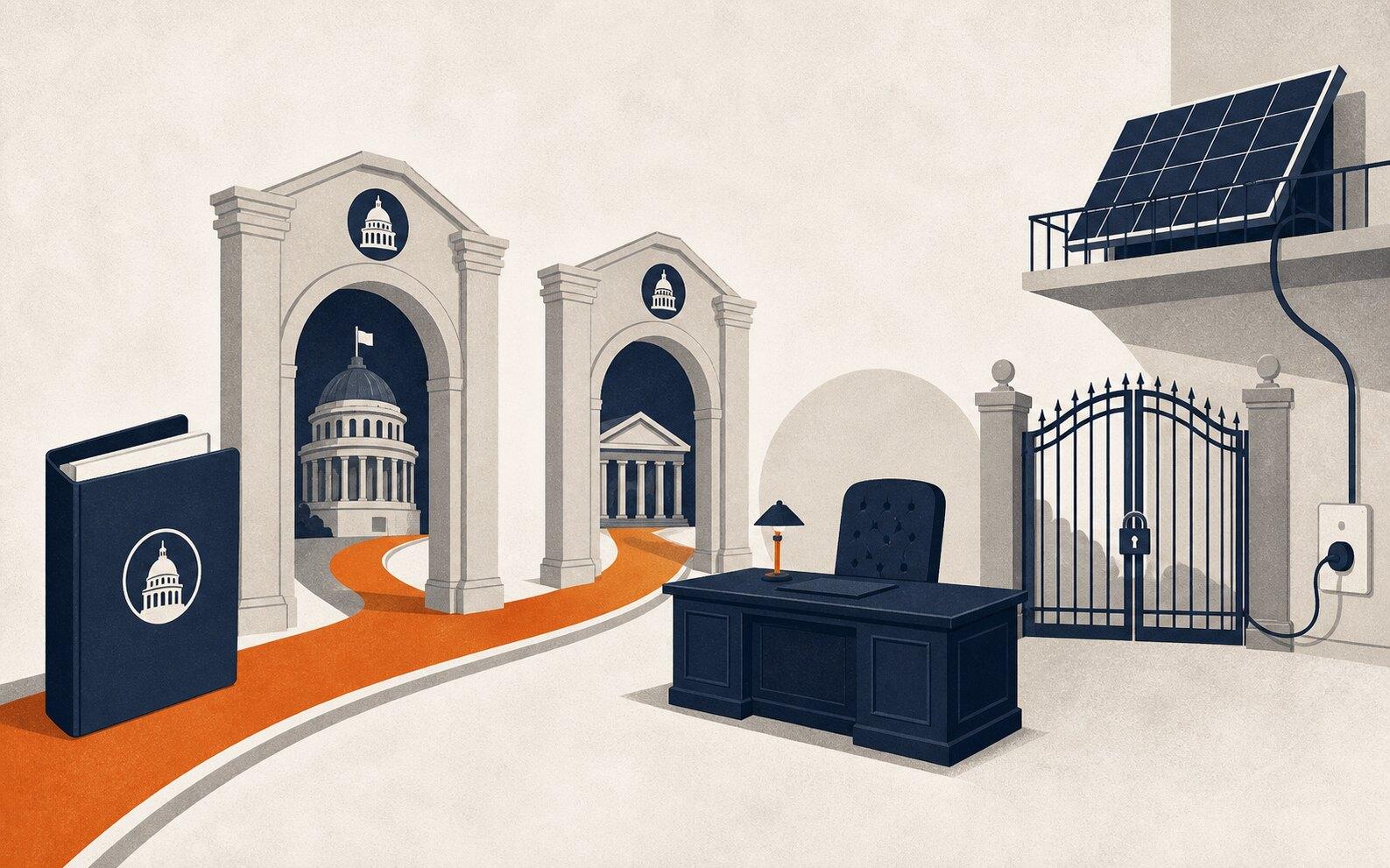
Key facts
- Status: enrolled and presented to the governor at 6 p.m. on August 31, 2026
- Assembly floor vote: 73-0 on August 25, 2026
- Senate concurrence vote: 36-4 on August 26, 2026
- Threshold: no more than 1,200 W maximum aggregated AC output per dwelling
- Evidence: certified plug-in PV system plus certified outage isolation
- Enrolled Section 8531 would expire on January 1, 2030
California's plug-in solar bill has completed the Legislature. The official record shows that the Assembly passed SB 868 by 73-0 on August 25, 2026. The Senate accepted the Assembly amendments by 36-4 the next day, and the enrolled bill was presented to Governor Gavin Newsom at 6 p.m. on August 31.
Enrollment is not enactment. The status page still lists SB 868 as an active enrolled bill in the governor's location, with no chapter number or signature shown. Californians cannot use its proposed exemptions unless the bill is enacted and the new route is in force.
What a qualifying device would need
| Condition | Enrolled SB 868 wording |
|---|---|
| Output | No more than 1,200 W maximum aggregated AC output per dwelling |
| Connection | Designed to connect and disconnect through a receptacle |
| Purpose | Intended to offset the customer's onsite electricity consumption |
| Electrical codes | The most recent National Electrical Code and California Electrical Code |
| System evidence | Plug-in photovoltaic system certification by UL or an equivalent NRTL |
| Outage behavior | A UL or equivalent NRTL-certified feature that prevents grid backfeed during an outage |
What the enrolled bill would change
If enacted and operative, proposed Public Utilities Code Section 8531 would exempt a qualifying device from interconnection requirements imposed by state law, the California Public Utilities Commission, electrical corporations and local publicly owned utilities. The exemption would include interconnection agreements.
A utility could not require prior approval, charge a fee related to the device or require controls beyond those built into it. The utility could ask for a simple online notice with the address, make, model and size. The enrolled text says that notice could not become an approval process. Section 8531 would expire on January 1, 2030. From that date, Section 8532 would bar the sale of receptacle-connected portable PV devices that fail the enrolled code, system-certification and outage-isolation conditions.
The complete-system evidence gate remains
SB 868 does not name UL 3700. It requires certification of the plug-in photovoltaic system by UL or an equivalent nationally recognized testing laboratory, plus certification of the feature that isolates the system during an outage. A listing for a microinverter or another component alone would not establish that the full panel, inverter, cabling, plug and controls package meets the definition.
WattRank has not verified a current US product with complete-system evidence matching those clauses. The enrolled text therefore describes a possible legal route, not proof that a kit on sale today would qualify. The 1,200 W threshold is also aggregated AC output per dwelling, not the sum of panel DC nameplate ratings.
What Californians should do now
Wait for the official record to show the governor's action and the operative date before relying on the exemption. Until then, follow the serving utility's current interconnection process, including Rule 21 where it applies, and check the exact electrical and local requirements for the grid-parallel configuration.
The bill does not grant renters or condominium owners permission to mount panels, alter a receptacle or route a cable through shared property. It also creates no export-payment entitlement. Keep property approval, mounting, circuit suitability, meter treatment and product evidence as separate decisions.
Next steps
Sources
Frequently asked questions
Did California legalize plug-in solar with SB 868?
Not yet. SB 868 passed both legislative chambers and was presented to Governor Gavin Newsom on August 31, 2026, but the official status still lists it as an active enrolled bill. Its proposed exemptions cannot be treated as current permission unless the bill is enacted and the new route is in force.
What is the current status of California SB 868?
The Assembly passed the final bill 73-0 on August 25. The Senate concurred in the Assembly amendments 36-4 on August 26. The Legislature enrolled it on August 28 and presented it to the governor at 6 p.m. on August 31. The next official event is governor action.
Is the 1,200 W limit based on solar panel wattage?
No. The enrolled text uses maximum aggregated AC output per dwelling. Panel DC nameplate capacity is a different measurement and may be higher than inverter AC output. The whole dwelling's inverter configuration must stay within the enrolled AC threshold if the bill becomes law in this form.
Would SB 868 require UL 3700 certification?
SB 868 does not name UL 3700. It requires the plug-in photovoltaic system to be certified by UL or an equivalent NRTL and separately requires certified outage isolation. Buyers would need the exact complete-system record. A certification attached only to a microinverter or panel would not establish every condition.
Would a California utility still need to approve the system?
If SB 868 is enacted and Section 8531 is in force, a qualifying device would not need prior utility approval or an interconnection agreement. A utility could require a simple online notice with the address, make, model and size, but the enrolled text says notification could not become an approval process.
Would SB 868 let renters install balcony panels?
No property permission appears in the enrolled utility provisions. A renter or condominium resident would still need to resolve landlord or association consent, mounting, shared-area access, cable routing and local requirements. Electrical eligibility and permission to alter a building remain separate questions.